
The unexpected behavior that makes people want to know you
On asking better questions, the vulnerability paradox, and what actually makes people want to befriend — or date — you.

A couple months ago, I met Ashley Kirsner, the founder and director of Skip The Small Talk, an organization that runs events that foster deep conversations between people who’ve just met. Some of those conversations turn into lasting friendships and relationships.
During a panel discussion we were both on at SXSW, I was struck by the specific takeaways Ashley had from her decade of facilitating events. I later asked her to talk one-on-one. Here are a few of my favorite moments from that conversation.
You told a story at SXSW about a behavior that you noticed was highly correlated with someone being ranked in the top tier for both romantic and platonic interest from attendees. Talk about what that thing is and how you discovered that it is such a clear predictor of people being interested in you.
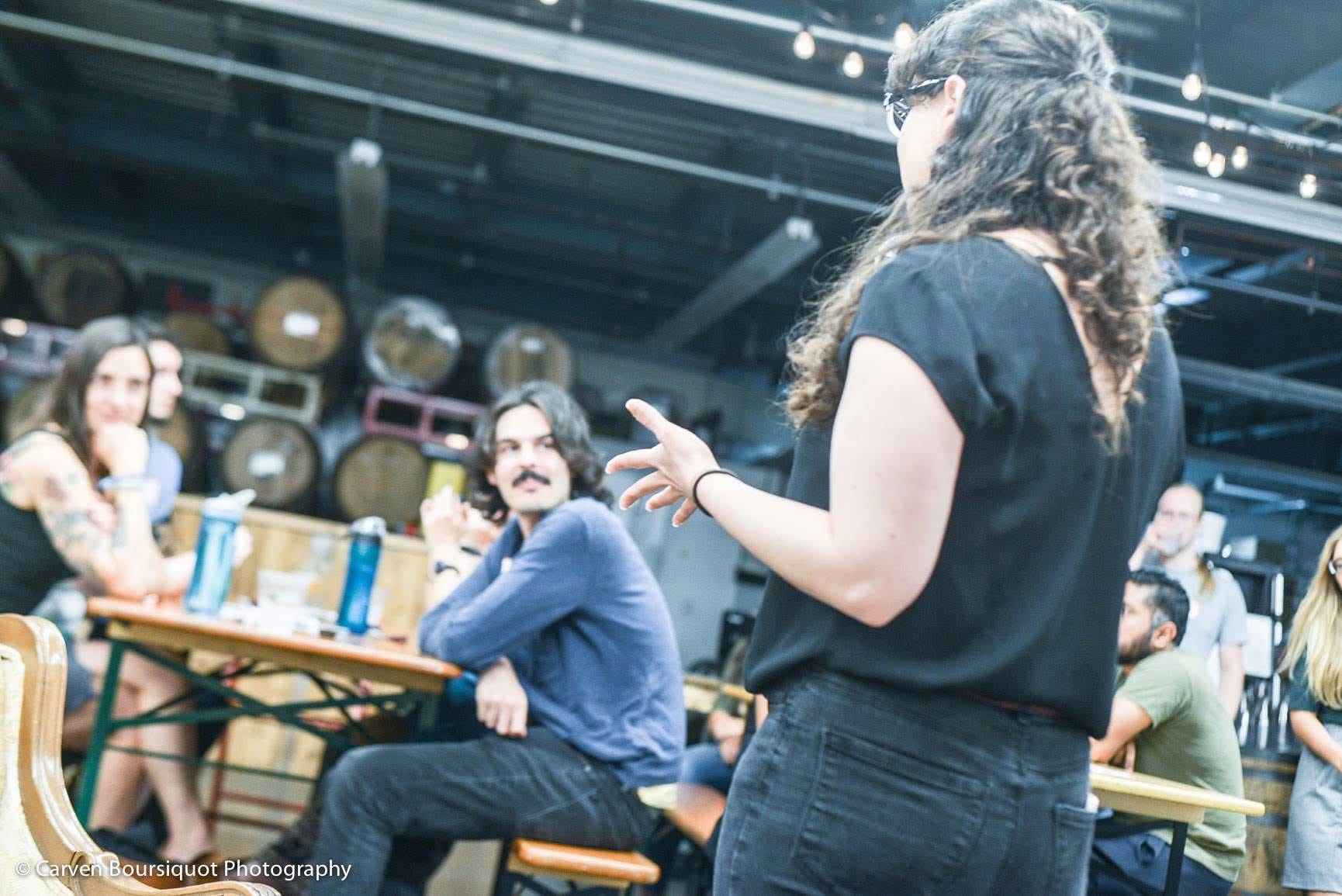
I remember there was one event in particular — it was a queer women event — and there was a woman there who had shown up who happened to be going through cancer treatment. So in case you’re not familiar, at the stage she was in, she was bald, she had chemo bloat; she was wearing clothes that were clearly more for comfort than for dressing up for a speed dating event.
And so immediately, I had Host Brain and I was like, “Oh no, I hope she does okay. What can I do to make sure that she has a nice time?” I didn’t really do much, and I was a little nervous, but halfway through, she came up to me and gave me the most heartfelt thank you I’ve ever gotten in my life where she just made me feel so seen and understood as an organizer. I was so taken aback and so touched. And I also made a little mental note to look at her little name tag ID number so that I can keep an eye on her and see how she did afterward. Immediately I was like, “Oh, wow, she’s so wonderful to talk to, but I hope people actually figure that out.”
As soon as the event ended, I looked through all the papers and it turned out that out of everyone at the event [about 40 people], she got the most matches, not just for friendship, but for romantic interest as well. Basically, everyone who spoke with her marked her down both as interested in being friends and also wanting to date.
Ashley, a researcher at heart, tried to see if there was something bigger to learn. Was thanking the facilitator a proxy for other qualities that predict people’s interest?
If someone said thank you to me at any point during the event, I would keep an eye on their name tag ID number when I was doing the matches.
And I did find that, pretty much invariably, if somebody said thank you to the facilitator, it was the best predictor of being in the top percentile of matches for both friendship and for romance. So that was wild to see.
I just kept finding across demographics — across ages, across orientations, across genders — irrespective of things that I would associate with general attractiveness, I just kept finding that actually it was more about this other thing — that is somehow captured by saying thank you to the facilitator.
I personally think it is some level of, are you able to stay considerate and empathetic even in a high anxiety situation? Because if you can, then that means that even on your speed dates, you’re going to be able to perspective-take, you’re going to be able to empathize and you’re going to be a little likelier to actually connect with someone. I found that also incredibly wholesome to see, and especially seeing it over and over and over again.
Are there particular questions or prompts that you think are really fruitful?
One of my personal favorites that I like asking is, “In what ways are you different from the person you were 10 years ago, and in what ways are you the same?”
In the process of answering the question, you can watch people slowly develop a growth narrative. You both get a snapshot of who they are now and also what they struggled with to get here. And so it’s also a nice sneaky way to get a little piece of vulnerability from people that feels a little less raw because it’s something they probably are not struggling with as much right now, but struggled with in the past.
Another one I really love is: “describe yourself through the eyes of someone who loves you,” which is a little cheesy. So you have to have a little higher tolerance for cheesiness. If it is the right vibe, you see people soften as they answer it and they talk about themselves so sweetly, they talk about their loved ones so tenderly. It’s really lovely to watch people answer that question.
You gave some specific questions, but are there rules of thumb for types of questions that lead to better conversations?
Yes. I love a question that gets at internal states instead of just facts or opinions. So for instance, things that get at a feeling or a personal experience that is going to have a feeling attached to it. I feel like an easy cheat code question is, “What was that like for you?” trying to really get at what did that feel like?
I also, when answering questions, find myself trying to add internal states, even if I wasn’t specifically asked for it. So for instance, if somebody asks where I’m from, I used to respond with, “Oh, I’m from Miami.” But now, I give a little extra hook to it — if I feel like someone’s actually interested and not just asking me out of obligation. I might say something like, “Oh, I’m from Miami, but, you know, I feel like the vibe was a little more image focused than a nerdy middle schooler could really tolerate. So now that I’m in Boston, I actually feel much more among my nerdy people.”
Being able to give a little more of an internal state both gives a little bit more of a concept of who I am, but also gives a lot more hooks for someone to then ask about instead of just, like, “Oh yeah, I had a friend grow up in Miami. What neighborhood?” That’s not as fruitful as, “Oh my God, I feel you. I’ve been in Boston too and yeah, it’s like Birkenstocks all the way, like, all the way down my street and I haven’t had to put on makeup in 10 years.” You get to more interesting conversations faster, the more you can pick at internal states and feelings.
“Are you able to stay considerate and empathetic even in a high anxiety situation? Because if you can, then that means that even on your speed dates, you’re going to be able to perspective-take, you’re going to be able to empathize and you’re going to be a little likelier to actually connect with someone."
In my own case sometimes I don’t want to talk too much or I don’t want to seem too self-focused, but the way that you’re framing it is that you are giving other people opportunities to move forward a more interesting conversation.
Yeah, exactly. And also you’re doing them a favor by being a little more vulnerable, because it gives them permission to be a little more vulnerable.
Is there anything that you have learned from Skip the Small Talk about connection or building friendship that you want to share?
Yeah. Honestly, one thing I wish more people knew is that it’s much safer to be vulnerable than we tend to think it is. And that on average, people want you to be more vulnerable than you probably are being. For instance, at our events, we always take an anonymous poll after everyone has their first 10-minute conversation. And we basically ask, “Are you content with how deeply you shared? Do you wish you had shared more deeply, less deeply. And how about your partner? Are you content with how deeply your partner shared? Do you wish they had shared more deeply or wish they had shared less deeply?”
And really invariably over the last 10 years, at every single event, the majority of folks are content with how much their partner shared or wish their partner shared more. And basically nobody ever wishes their partner shared less vulnerably.
And so seeing that over and over and over again has really changed my own perceptions about how vulnerable it is safe to be, but also how vulnerable people actually want you to be.
There is this weird gap that, as Brené Brown says, “Vulnerability is the last thing I want you to see in me, but the first thing I look for in you.” I do think there is this weird cognitive bias we all have that we don’t realize that other people would actually like us to be more vulnerable in general and that other people would feel closer to us if we were more vulnerable.
“Over the last 10 years, at every single event…nobody ever wishes their partner shared less vulnerably.”
How have you figured out how to get people to be vulnerable, which will help them become closer to other people, even if they don’t actually feel like they want to do it?
People are much more willing to be vulnerable when you frame it in terms of, can you help other people be a little more vulnerable by being a little more vulnerable yourself? And then people are really willing to do it — so having a space where it’s like, “oh, no, you’re not doing this for you, you’re doing this for other people.”
And that’s why I think support group formats work so beautifully: you’re encouraged to share your own story and your own difficulties and your own challenges in order to help other people feel less alone. But also, of course, in that process, you’re feeling more seen yourself. I think it does such a great job at reducing the shame piece if you can sort of trick people to be vulnerable by telling them to be more vulnerable to help other people feel less alone. It definitely is a great hack.
You can join in-person and virtual Skip The Small Talk events all over the country.
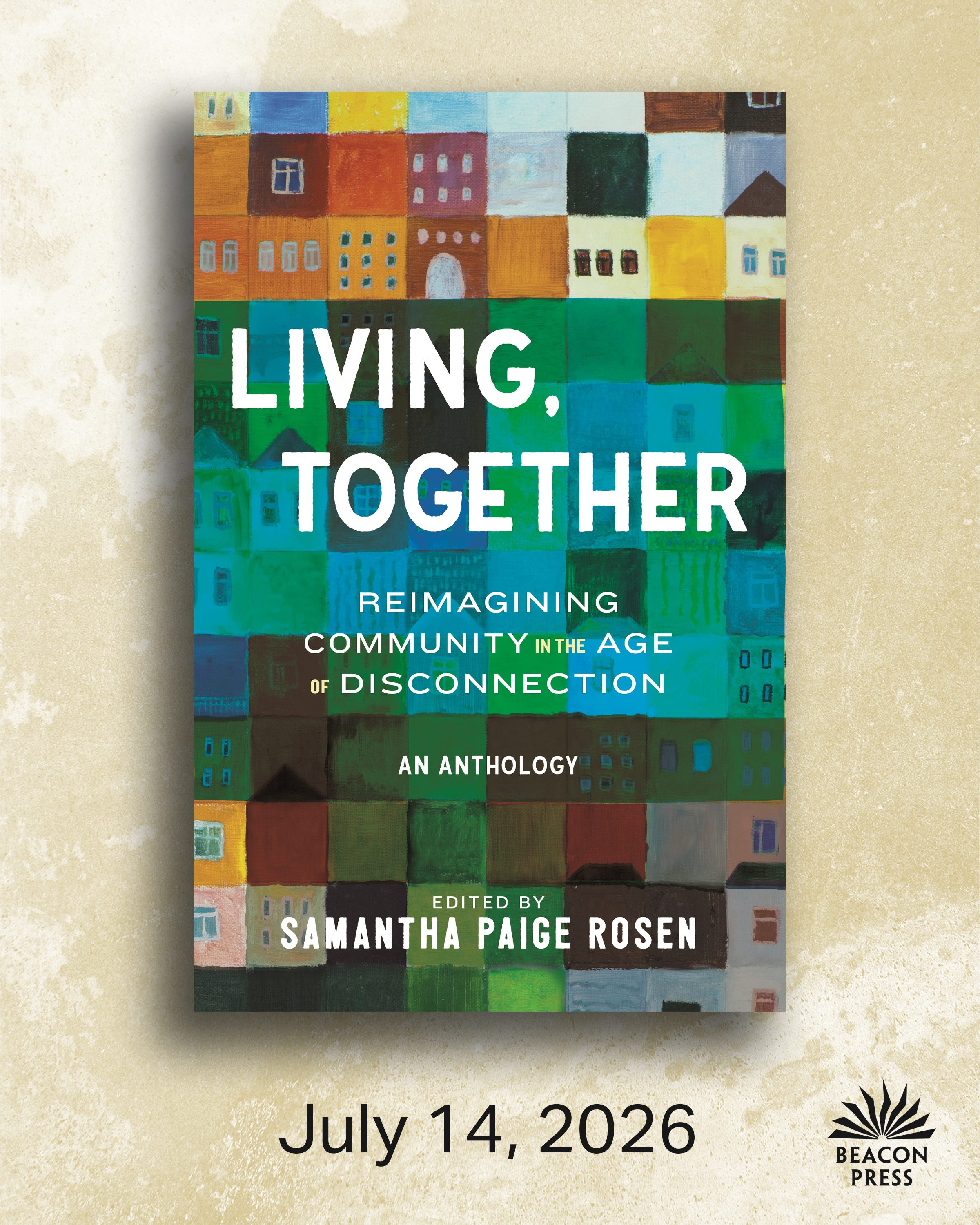
Some news: I wrote an essay for an anthology about shared living that comes out in a couple months! It’s called Living, Together. My essay reflects on a deeply meaningful group living arrangement I had for three years (the one I wrote about in The Other Significant Others) and what it means to commit to living with others when you know, from the start, that the commitment has an expiration date.
You can preorder the book now. Go on, admire the cover.
You can also catch me at a couple of book launch events in July.
7/16: Philadelphia — Philadelphia Ethical Society, with Samantha Paige Rosen and Alex Alberto
7/23: Washington, DC — Politics & Prose Union Market, with Samantha Paige Rosen and Hannah Grieco
this is a great post! I love the prompt, "can you be a little bit vulnerable to help others be vulnerable."